23.02.2026
Enrique Goñi: «Your data is your identity, your dignity»
Enrique Goñi: “Your data is your identity, your dignity”
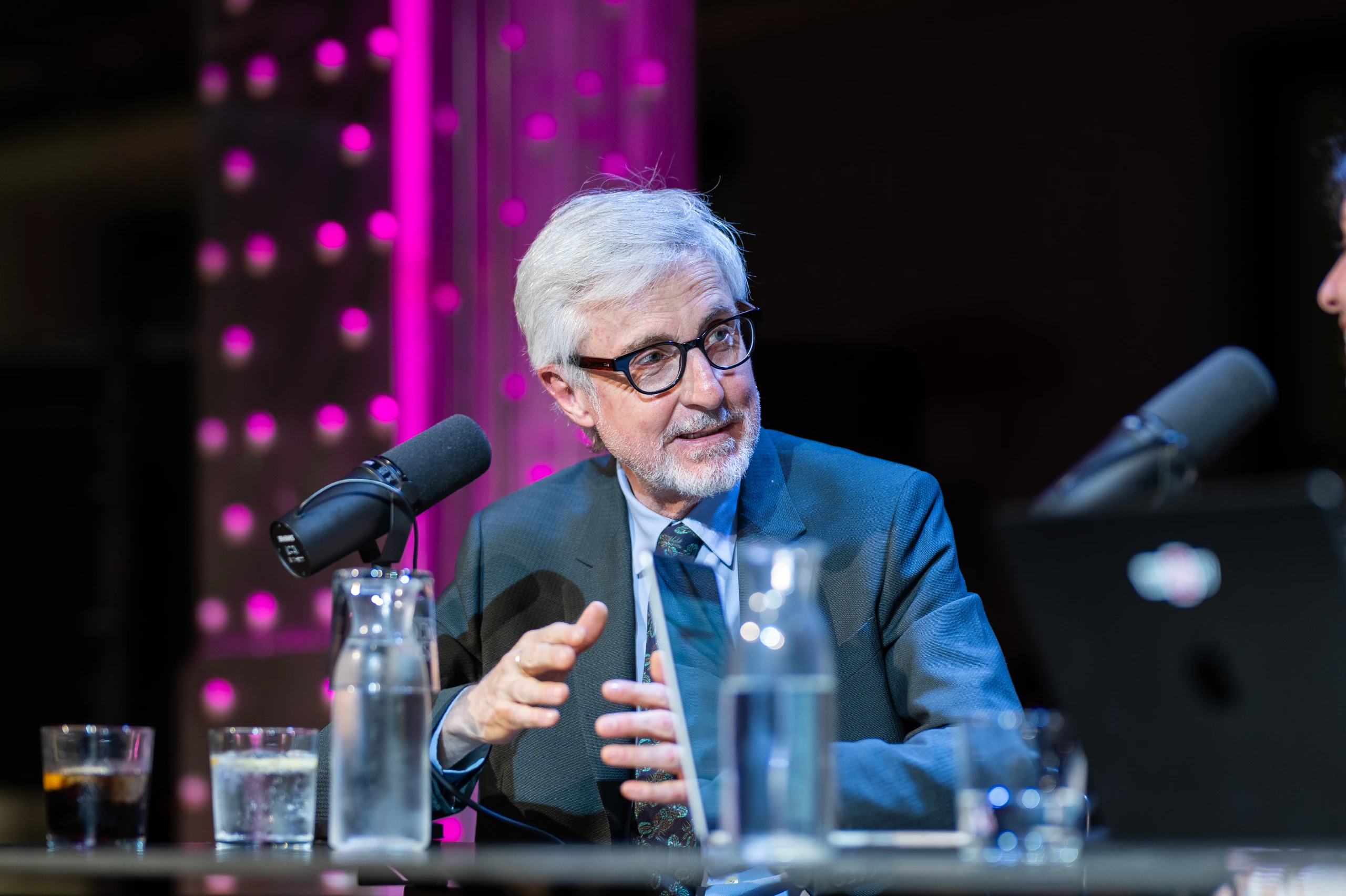
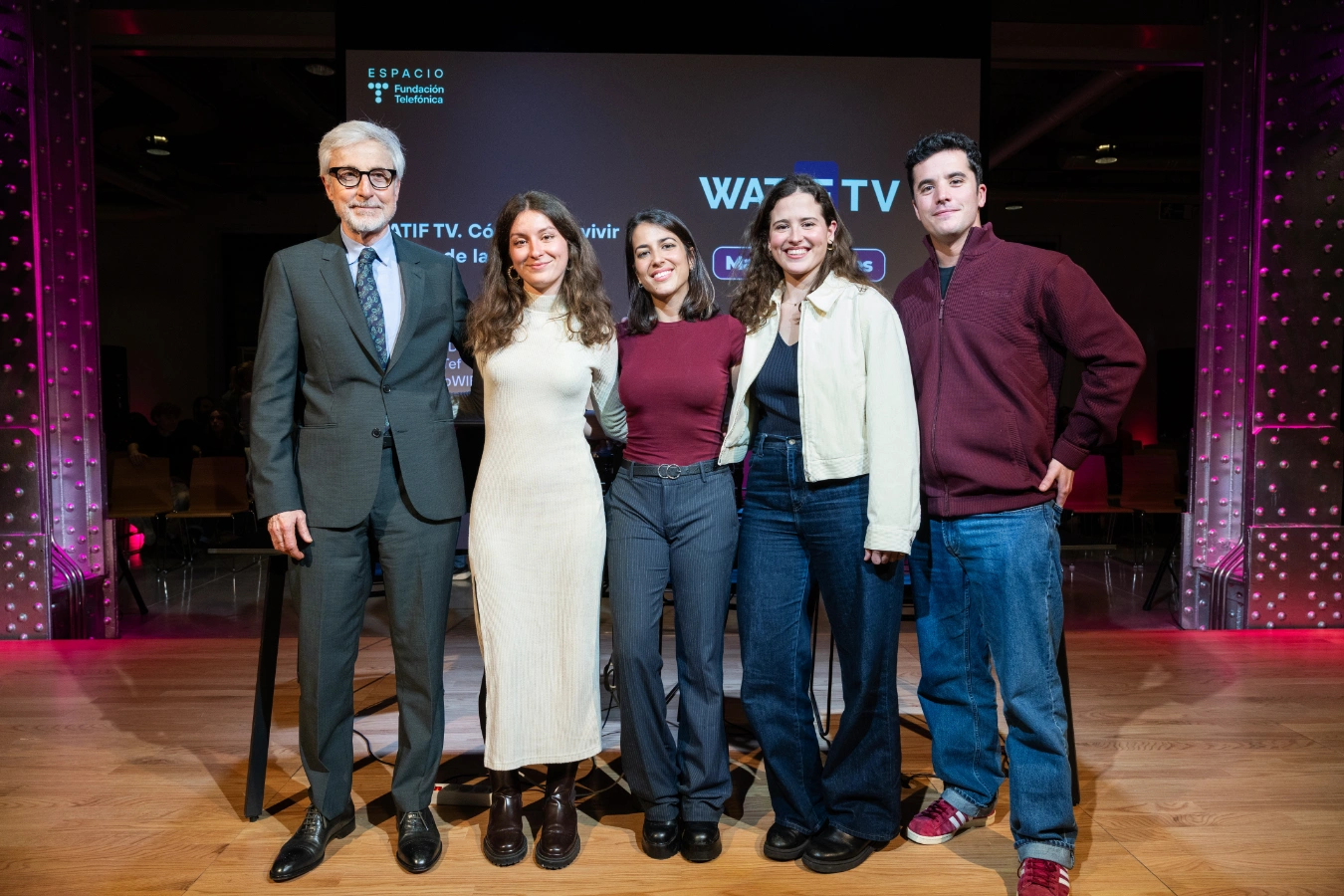
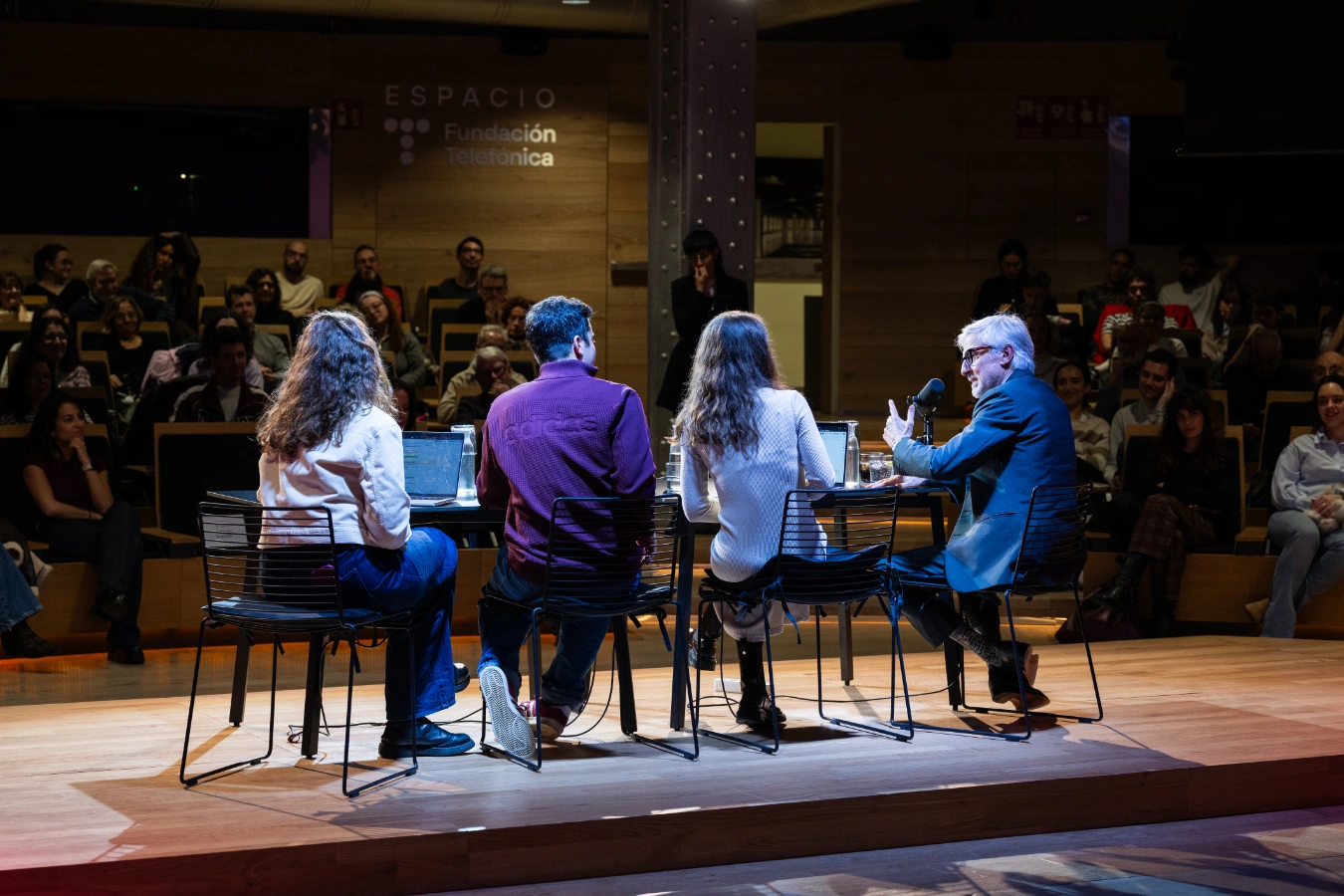
Artificial intelligence, the use of personal data, and European technological sovereignty were the focus of the conversation with Enrique Goñi, president of Fundación Telefónica and president and founder of Fundación Hermes, during the recording of the WATIF TV program dedicated, on this occasion, to ‘How to survive in the age of AI’. The current affairs program, hosted by young journalists and broadcast on YouTube on Tuesdays and Thursdays from 8:30 to 9:30 a.m., was recorded at the Fundación Telefónica Space. It also featured the participation of journalist and science communicator Rocío Vidal, better known as Schrödinger’s Cat.
The conversation with Mar Manrique, Marina Enrich, and Emilio Doménech combined ethical reflection and analysis of the current technological context. Goñi defended a people-centered vision of technology, in which digital progress must be accompanied by special attention to civic awareness, the protection of digital rights, and a definitive commitment to Europe’s own technological capabilities.
“The future happens because you control technology. Don’t let technology control you”
Technology, control, and personal autonomy
From the beginning, the president of Fundación Telefónica emphasized the relationship that people have with technology and the need to regain control over its use. “The future depends on you managing technology and not being dragged along by it,” he said, while warning about digital consumption dynamics that encourage dependence. In his opinion, “scrolling and all these horror stories are simply the result of an addiction that is not psychopathic, but rather empty psycho-entertainment. Empty calories.”
Although he defined himself as a technophile, he stressed that the problem is not technology itself, but the way it is integrated into everyday life. “I don’t think we should give up digital technologies,” he said.
Digital rights as a fundamental part of citizenship
One of the main topics of conversation was digital rights, which Goñi linked directly to people’s identity and dignity. “Your data is your identity, your dignity,” he said. Furthermore, in a reflection that connected the digital environment with traditional civil rights, he said that “just as you don’t like being physically groped, you also don’t like being mentally, psychologically, emotionally, commercially, etc. groped. And we are being groped.”
From this perspective, he defended the need to promote greater social awareness of the value of personal data and the impact of its non-consensual use. For Goñi, the debate is not limited to regulation, but involves an active attitude on the part of citizens: “What is really important is that society is educated, aware, and mobilized.”



Youth, rebellion, and digital awareness
With regard to younger people, Goñi pointed out that these are generations that have grown up in a digital environment in which many rights have been weakened. Therefore, rather than resorting solely to prohibition, he advocated for a call to individual responsibility. “The issue is not so much about prohibiting access, but rather calling on them to be rebellious,” he explained, understood as the ability to make informed decisions about the use of technology and the management of personal data.
This rebelliousness, he said, involves recognizing that technology can influence behavior and decisions if clear and conscious limits are not established.
“What really matters is that society is educated, aware, and mobilized”
Artificial intelligence and constant presence
Another topic of conversation revolved around the difference between artificial intelligence used on an ad hoc basis and that which accompanies people on a permanent basis. Regarding the latter, Goñi warned of the risks associated with continuous data collection: “It’s continuous recording. It’s The Truman Show in its most aberrant form. And it’s happening to each and every one of us.”
Faced with this scenario, he advocated for the conscious use of artificial intelligence, geared toward social benefit and respect for digital rights. “It’s not about a digital detox,” he explained. “It would be enough for this technology, used intensively, to simply be beneficial. We need to put our foot down on all the harmful aspects of unauthorized data use, remote control, substitution of your will, guidance, and direct manipulation of our children—all of which is indecent.”
Personal data and economic value
During the conversation, Goñi also addressed the economic value of personal data and the need for people to be aware of it. “If you want data, give me a discount,” he said, explaining an initiative aimed at raising awareness that data has value and that its transfer must be voluntary and fair.
The goal, he said, is not to hinder economic activity, but to raise public awareness and move toward models in which people can decide how their data is managed and share in the value it generates.
Europe and technological sovereignty
From an institutional perspective, Goñi clearly defended the need for Europe to boost its own technological capacity. “Radically and absolutely yes,” he replied when asked about European technological sovereignty. “Europe is a moral concept. It is a 75-year success story. It is not just a story of political construction. Europe knew how to civilize politics and now it has to civilize technology.”
In his speech, he stressed that Europe has sufficient talent, resources, and cooperative experience to compete in the global technological arena. “We have talent, we have money,” he said, underscoring the importance of cooperation and political will to transform that potential into concrete projects.
Goñi clearly defended the need for Europe to boost its own technological capacity
Towards responsible certification of artificial intelligence
Among the proposals put forward, Goñi advocated the creation of an algorithmic certification system to evaluate the behavior of artificial intelligence. This model would be based on four principles: revocability, accountability, transparency, and traceability. “Enough of this nonsense about black boxes not being opened,” he said, calling for algorithmic systems to be analyzed and evaluated using clear criteria.
The ultimate goal of this proposal is to ensure fair and balanced use of technology. In Goñi’s words, it is about moving towards a model in which AI “can be eaten without eating you.”
The conversation concluded with an idea that runs through all of his thinking: the defense of freedom in the digital environment as an indispensable condition for a democratic and conscious society.