Exposición
‘Expanded World: Between the Physical and the Virtual’ in Santiago de Compostela
Place
Museum Centro Gaiás, Cidade da Cultura
Date
04 February 2026 - 30 August 2026
Fundación Telefónica and the Xunta de Galicia present the exhibition Expanded World: Between the Physical and the Virtual, an international exhibition that invites visitors to explore the boundaries between physical reality and digital simulation, delving into the effects of the explosion of virtual worlds on our lives.
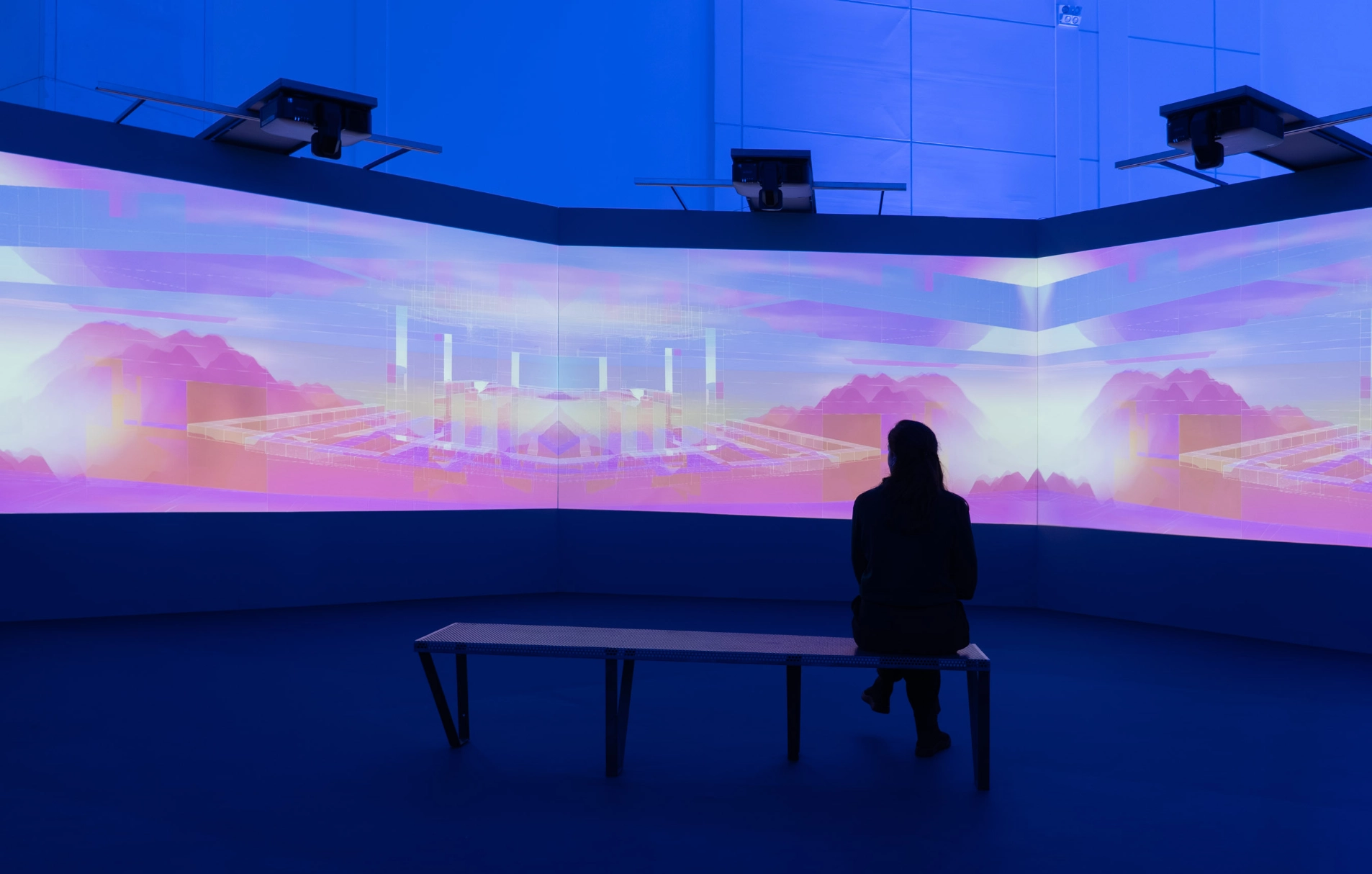
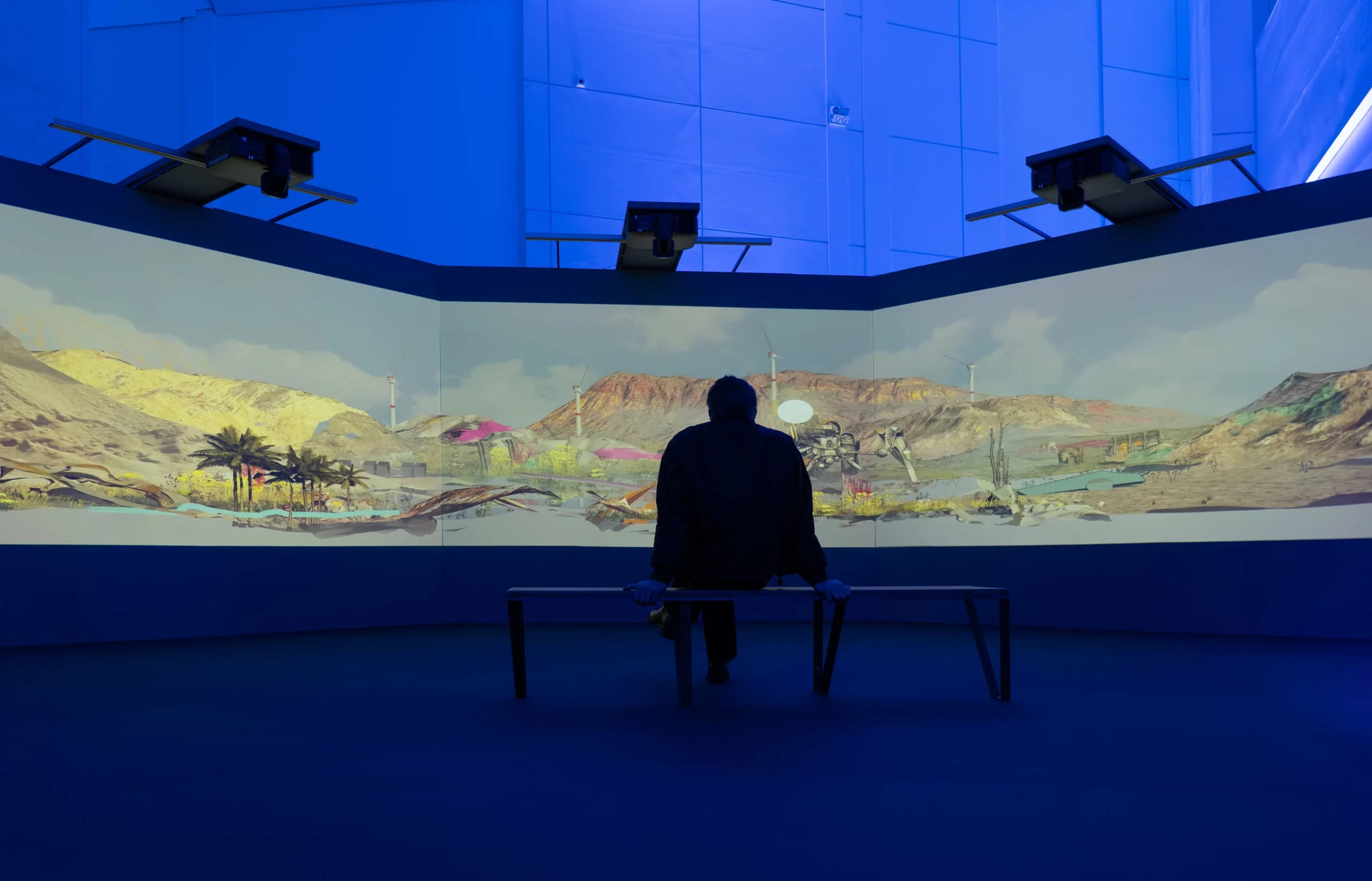
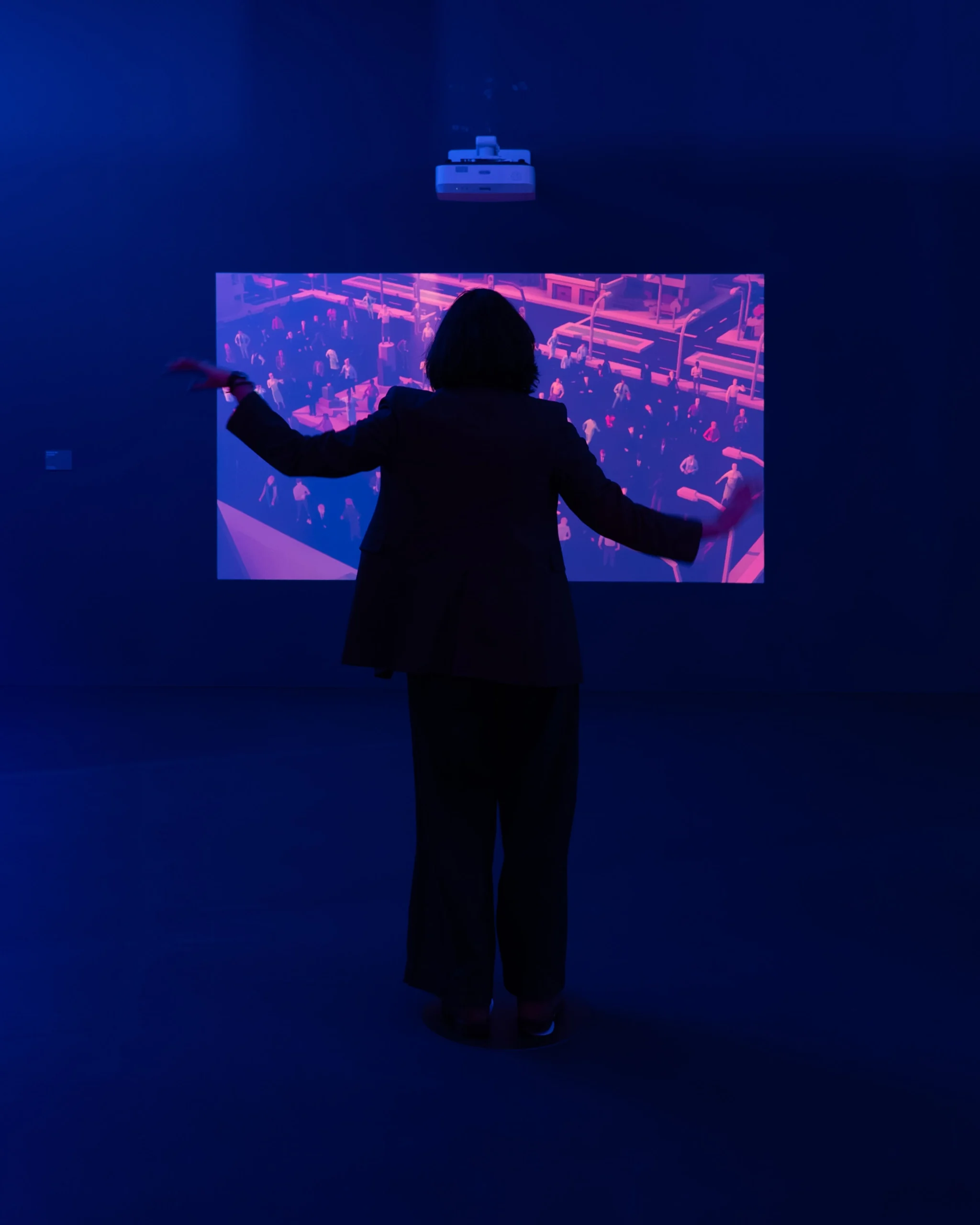
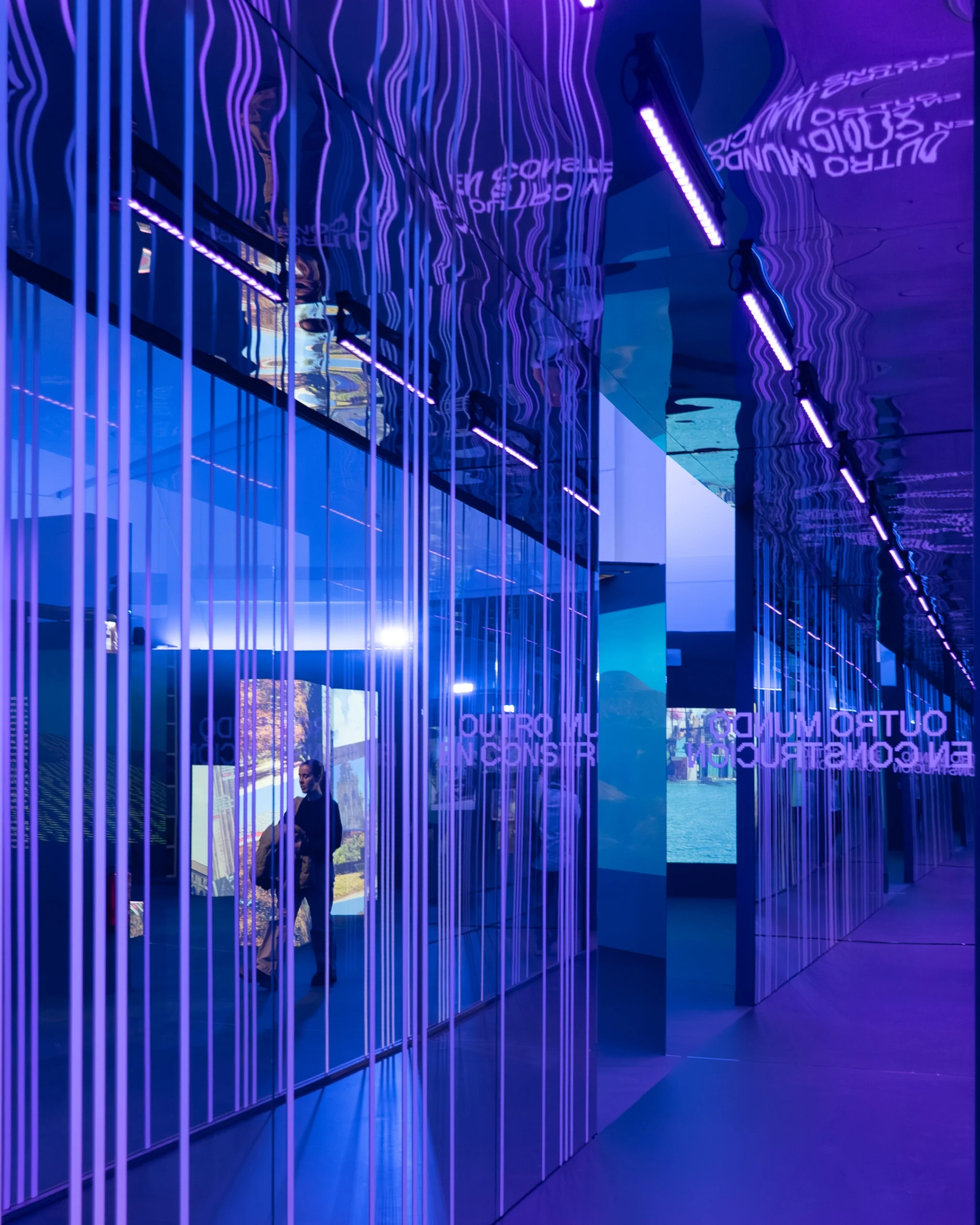
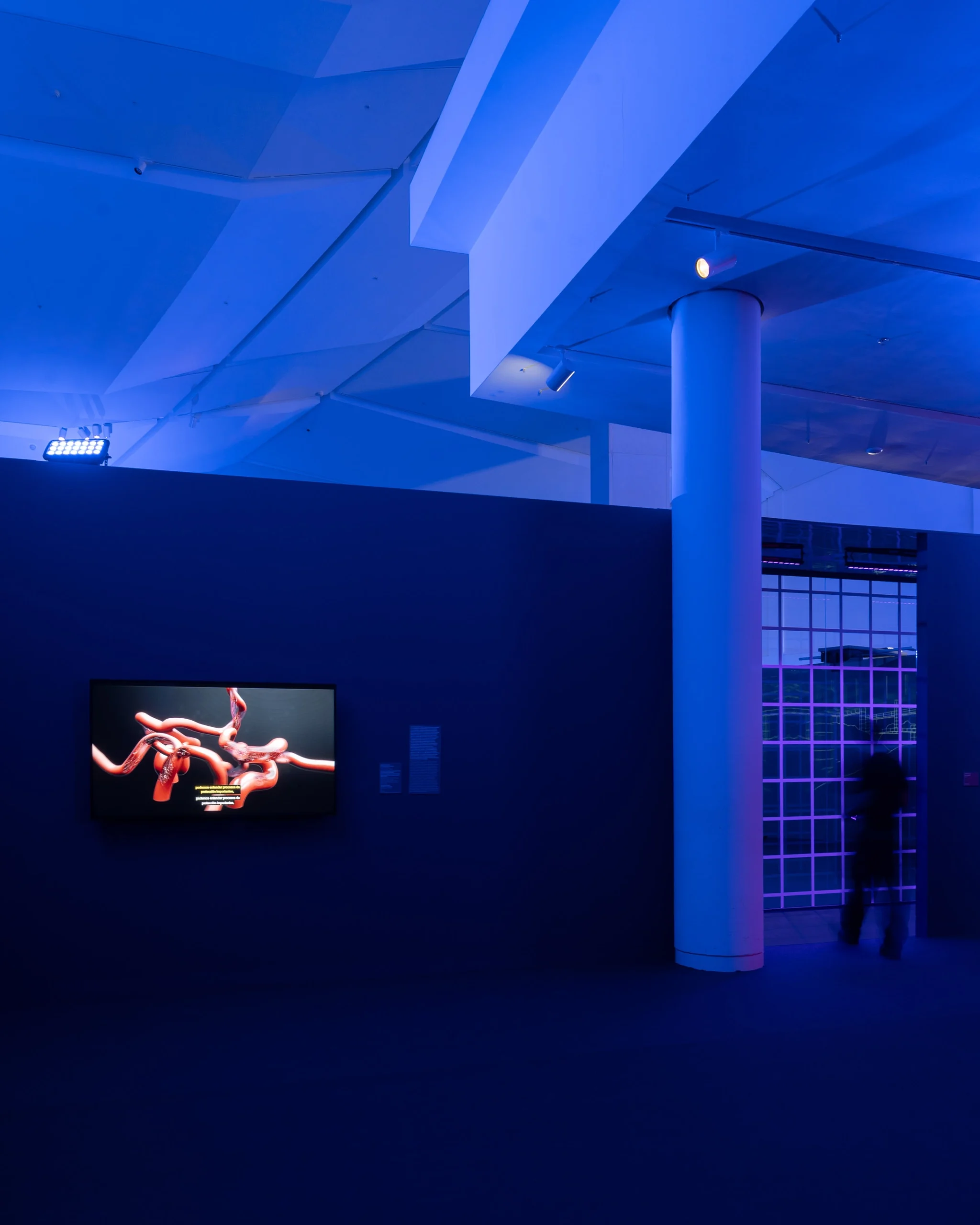
Exhibition view from the traveling exhibition “Expanded World: Between the Physical and the Virtual”
Featuring more than 80 works by artists from a dozen countries—Canada, the United States, China, South Korea, Switzerland, Greece, the United Kingdom, Italy, France, New Zealand, and Spain— the exhibition features interactive installations, video games, historical artifacts, and artworks that address highly topical issues such as the use of artificial intelligence tools, the creation of digital twins, polarization, and online harassment.
Mundo expandido is a project by Fundación Telefónica that arrives in Santiago after being exhibited in Madrid and Lima. Its stay at the Cidade da Cultura will allow the Galician public “to experience an innovative, world-class cultural initiative,” noted the Regional Minister of Culture, Language, and Youth, José López Campos, during the opening ceremony, where he was accompanied by the head of exhibitions at Fundación Telefónica, Maria Brancós Barti; the General Director of Culture for the Regional Government, Anxo M. Lorenzo; and the Managing Director of the Cidade da Cultura, Ana Isabel Vázquez.
Expanded World: Between the Physical and the Virtual will be open to the public free of charge until August 30 and will feature a program of guided and educational tours designed to help Galician students engage with the exhibition from a perspective adapted to school curricula. Furthermore, as part of the Gaiás Inspira program, it will include its own program of recreational and educational activities, aimed at adults, children, and young people alike, with initiatives designed to transform the museum’s galleries into a living space, open to public participation and shared learning.
An exhibition on current issues: artificial intelligence, digital twins, polarization, and online harassment
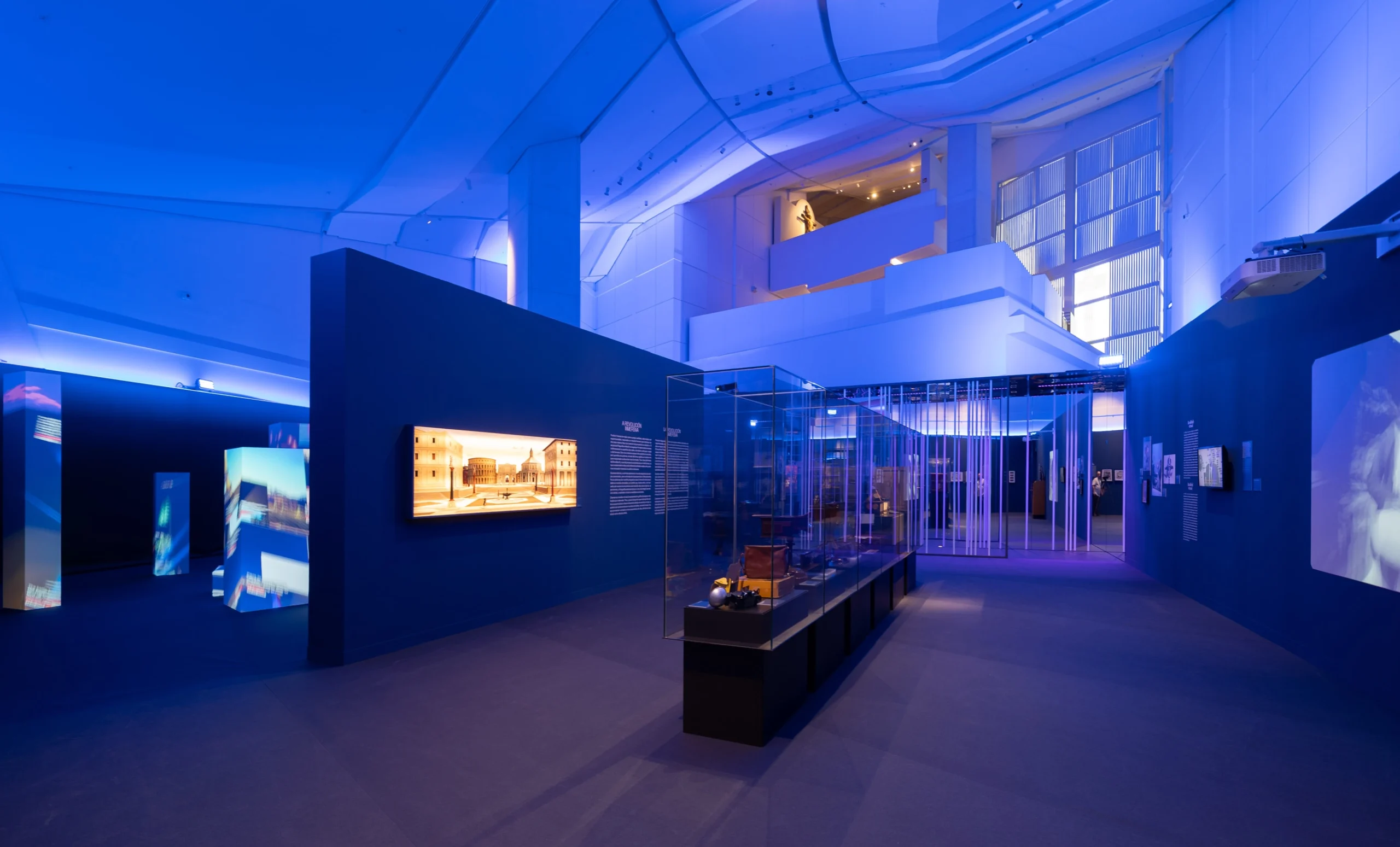
Exhibition view from the traveling exhibition 'Expanded World: Between the Physical and the Virtual'
A Vision of a Hybrid Reality
Several of the works on display feature a significant interactive component, such as the augmented reality filters by creators Inés Alpha and Johanna Jaskowska, who work at the intersection of art, fashion, and technology, exploring how our visual identity changes in the digital age. Based in Madrid, Jaskowska gained worldwide recognition thanks to her viral augmented reality filter for Instagram, Beauty3000, which racked up over 500 million impressions and opened the door to collaborations with industry giants such as Nike, Givenchy, Lady Gaga, and Vogue.
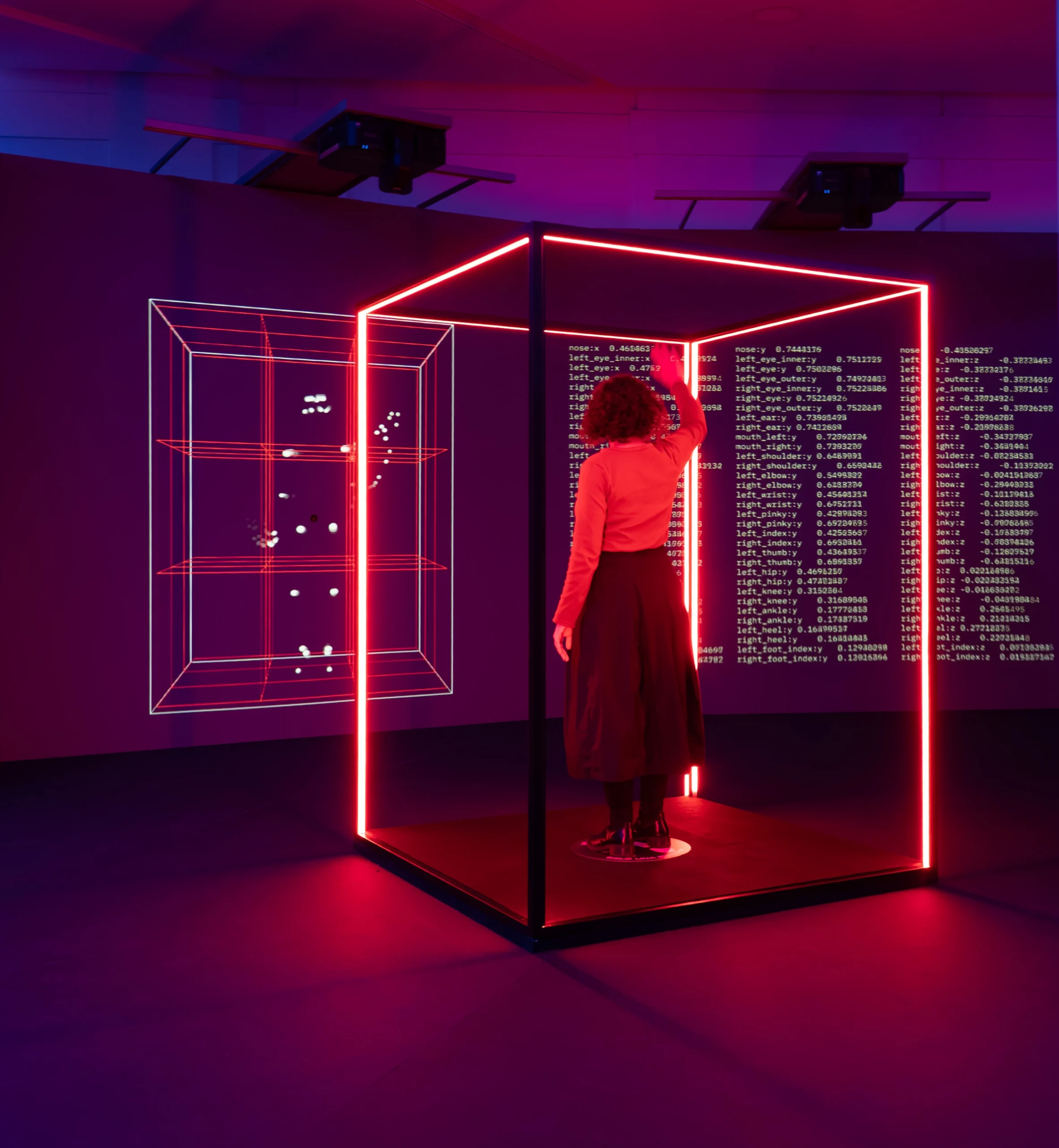
Visitors will also be able to try out the video game 2065, by London-based creator Lawrence Lek—named by Time magazine as one of the 100 most influential people working in artificial intelligence—or the interactive piece Bounding Box, through which artist Solimán López reflects on the compilation of large volumes of data and the limits of using technology in unconventional ways.
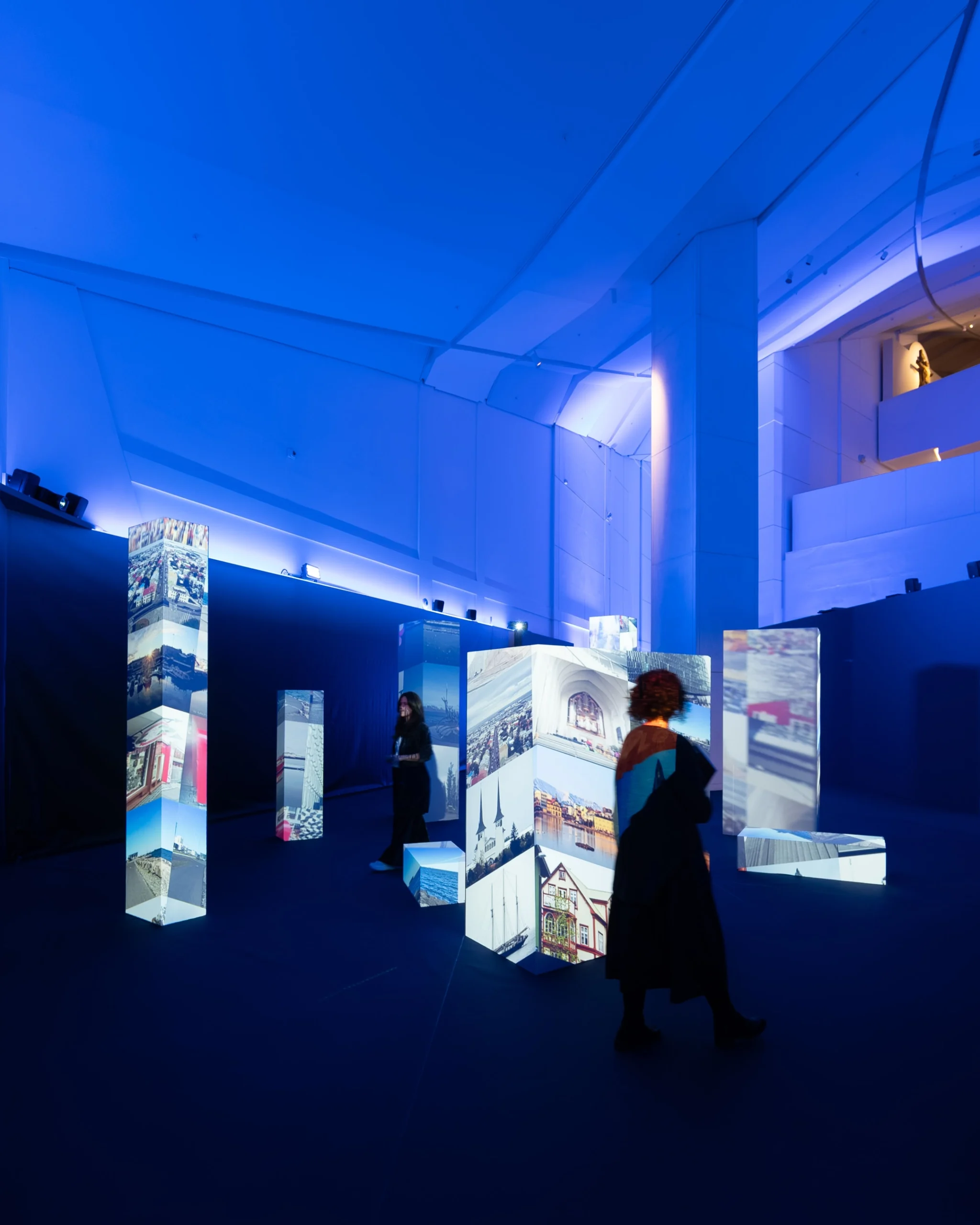
The exhibition also features the digital, social, and cultural project Tuvalu metaverse, through which this small Pacific island nation has created a digital twin in the metaverse in an effort to raise awareness about its future disappearance beneath the waves due to climate change. Radicalization on social media, the loss of cities’ identities due to globalization, and the creation of fully digital beings who are making a name for themselves in the worlds of fashion and music are among the other issues addressed in this exhibition.
Rounding out the exhibition is a selection of historical objects from the 18th and 19th centuries, which already began experimenting with the phenomenon of three-dimensionality, leading the public to discover pieces such as the optical box, the diorama, stereoscopic viewers, and the first computer programs to create simulated worlds.
A journey from historical objects that experimented with three-dimensionality to current issues in virtual worlds